Agenda
Finish draft board 1, 2 for tomorrows tutorial
Topics: Mobile [ Summary ]
. Natural Disasters
- Mitigation of Natural Disasters
- Prevention - Structural - People
- Protection - Infrastructure
- Recovery - Immediate - Health - Rebuilding Infrastructure
- Long Term - Health - Rebuilding Community
- Rebuilding Livelihood
. Transport - Congestion - Environmental Impact - Health
- Carbon Emission
- Underground Transport [ Solution ]
- Communication - More Efficient Use of Roads
- More Roads - Less Green Space
. Environment - Carbon Tax
- Overconsumption - Waste - Carbon Emission - Climate Change
- Actions - Natural Disasters
- Economy Downfall - Health
. Food
- Waste - Landfill - Carbon Emission
- Production Waste - Transport - Oil
- Carbon Emission
- Congestion
- Distribution
- Accessible
- Primary Suppliers - Secondary Middle Man [Distributer] - Consumption
- Transport
. Communication
- Meeting in Person - Inefficient use of Resources [Debate, Campaigning]
- Politician Communication
- Public - Movable Pavilion
- Each Other
- Other Countries
. Economy - Alternative Self Sufficient Markets
Today we discussed what exactly will be in our boards.
We went through our notebooks and blogs to simplify our thoughts, trying to summarise our thoughts from the last 5 weeks.
Showing posts with label Week5. Show all posts
Showing posts with label Week5. Show all posts
{ Week 5 } Chance to Grow?
What are the system’s possibilities for growth?
Can there be many smaller mobile structures that can function independently but can come together for coordinating larger operations?
Can the mobile structures continue to grow as changes and new needs must be met?
Perhaps producing fruit, vegetables and wheat/rice, etc is not enough. Maybe there is a possibility for extending this food network into the water ie. Fishing catchments. Pretty convenient since we are in the water anyway.

http://forums.civfanatics.com/showthread.php?t=382212
This is from a game website. It makes me think about possibilities about having several mobile parts that could possibly come together to perform complex functions but can still function independently. Possibly this could also talk about creating communities and ideas about flexibility to cater for different aid responses based on assessing the needs of the people.

Can there be many smaller mobile structures that can function independently but can come together for coordinating larger operations?
Can the mobile structures continue to grow as changes and new needs must be met?
Perhaps producing fruit, vegetables and wheat/rice, etc is not enough. Maybe there is a possibility for extending this food network into the water ie. Fishing catchments. Pretty convenient since we are in the water anyway.
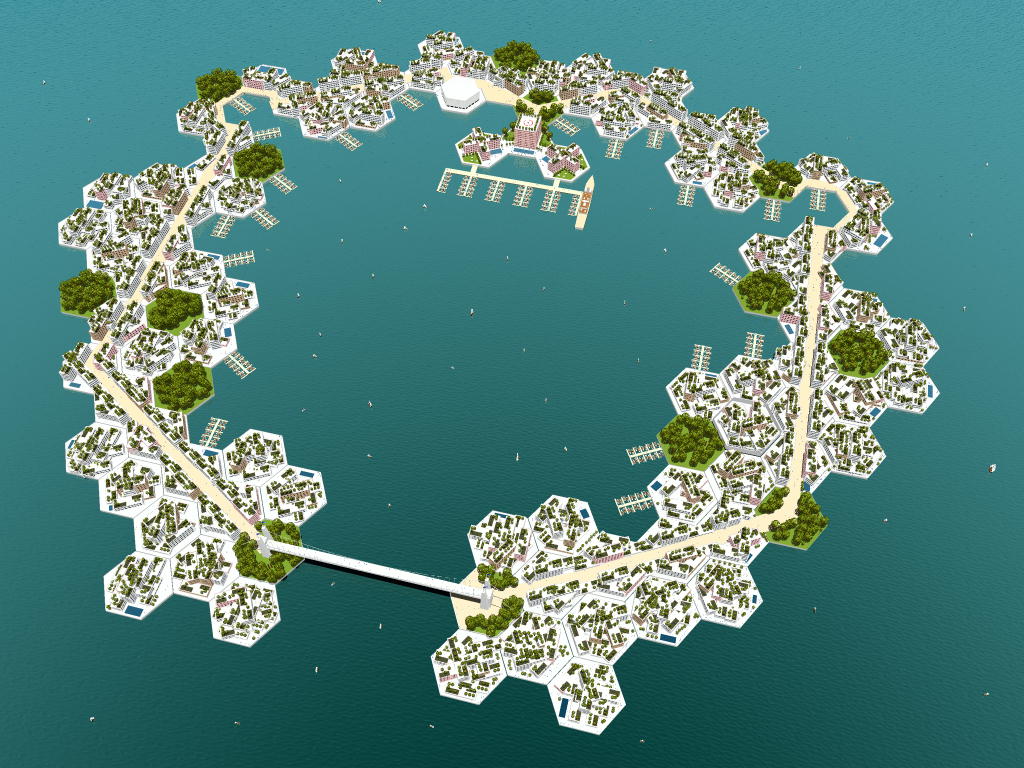
http://forums.civfanatics.com/showthread.php?t=382212
This is from a game website. It makes me think about possibilities about having several mobile parts that could possibly come together to perform complex functions but can still function independently. Possibly this could also talk about creating communities and ideas about flexibility to cater for different aid responses based on assessing the needs of the people.


{ Week 5 } What to do with the food containers afterwards?

If we were to distribute food using shipment containers, we wonder if it is important to collect the containers afterwards for reuse or if there is a better way to recycle them for better use on land.
At first, we came up with using the containers for future housing because it would be cheap and would provide an added bonus in providing care for people.
Another option would be to alter the containers so that they can be quickly converted to become functional spaces for volunteers and officials to use for food storage, food distribution, meal preparation to feed the masses and accommodation, etc. Perhaps some can remain mobile to provide food to people who cannot reach refugee camps, etc.
{ Week 5 } What would the food be contained in?
Would it be harvested and shipped? Or would it be shipped in the container it grew in to continue production on land?
The first option may produce less waste and is simpler. It might just be plastic wrapped?
The second option would be more complex. Transporting soil is very heavy and what would we do with the containers afterwards?
The first option may produce less waste and is simpler. It might just be plastic wrapped?
The second option would be more complex. Transporting soil is very heavy and what would we do with the containers afterwards?
{ Week 5 } What happens upon arrival? How is food unloaded?

I think because this mobile structure will be so big, we must think about access. Will it be able to fit under bridges or go into narrow ports? What about turning circles? Countries in poverty or disasters may not have the infrastructure to be able to bring in the mobile structure for anchoring.

As well as this, we must consider safety when entering countries in conflict. Our solution is to make it possible to anchor offshore and carry the food in using a smaller boat.
{ Week 5 } Food Ports

Thinking about possible ideas for reducing food milage and making our mobile structure work better with the food aid systems. One option we looked at was to transform parts of Australia’s major seaports into farms as well. We might be biting off more than we can chew though and this would require massive amounts of research.
QUESTION
What sort of changes would we see in the community and its urban character? How would this affect the fishing industry? What would this do for roads and access?
{ Week 5 } How it can fit with existing aid responses?

One important factor of the mobile structure was to understand how it would work with existing aid responses. After researching current aid systems and having lengthy talks with the group, we decided that parliament can help by providing a response that sits between a plane response and a ship response.


{ Week 5 } Current Aid Responses and Strategies

AIRDROP
Airdrop is expensive and dangerous but is done when other means of transport is not possible ie. When roads are blocked or washed out. It takes three days to secure a drop, contact local officials and warn locals to stay clear of the area.
Food can weigh 120pounds so it triple wrapped in plastic to survive a 1,600 foot drop.
ONCE ON GROUND
Food is then hauled onto trucks by local villagers and driven to a nearby warehouse to be distributed by different organisations ie. WFP, CARE, Catholic Charities, etc.
Distribution of food is organised to avoid chaos. People present registration cards which contain family details such as ages and number of children to receive food.
SHIP FREIGHT
Ships currently travel from their point of origin to major ports.
Food is then loaded onto trucks, trains, helicopters and planes. Sometimes, camel, elephants, donkeys, yaks and other alternative modes of transport are used because of factors such as availability or terrain difficulties. Land mines and rebel forces are also an issue.
OTHER FORMS OF CONTRIBUTION
Contribution comes in three forms: cash, food and services.
Food is bought from places close by to reduce wasting time and transport costs.
DELIVERING MEALS
Food sent must be transportable and won’t spoil. It is likely that they won’t be able to cook their meals. This costs 30 cents a meal.
People are given basics: cereal, beans, peas, vegetable oil, salt, sugar, wheat, maize or soy flour.
People’s needs are firstly assessed and diet is considered. Rice is often sent to Asian countries. Millet, a common African grain, is sent to African countries.
It’s about keeping people alive, being culturally appropriate and assessing needs.
REBUILDING LIVES
Putting communities back together takes time, work and more nutritious food.
A critical component is its school feeding programs. Children come to school and receive free meals.
Food for work programs help rebuild bridges, dams and wells.
Health programs are implemented and proper nutrition is provided to care for pregnant mothers and ensure babies are born healthy.
“Food is a fundamental building block for healthy societies. The answer for curing hunger long-term is to invest in these programs.” (WFP Officer, Maggie Carrington)
http://www.wiziq.com/tutorial/53758-Food-Force-2
Subscribe to:
Posts (Atom)