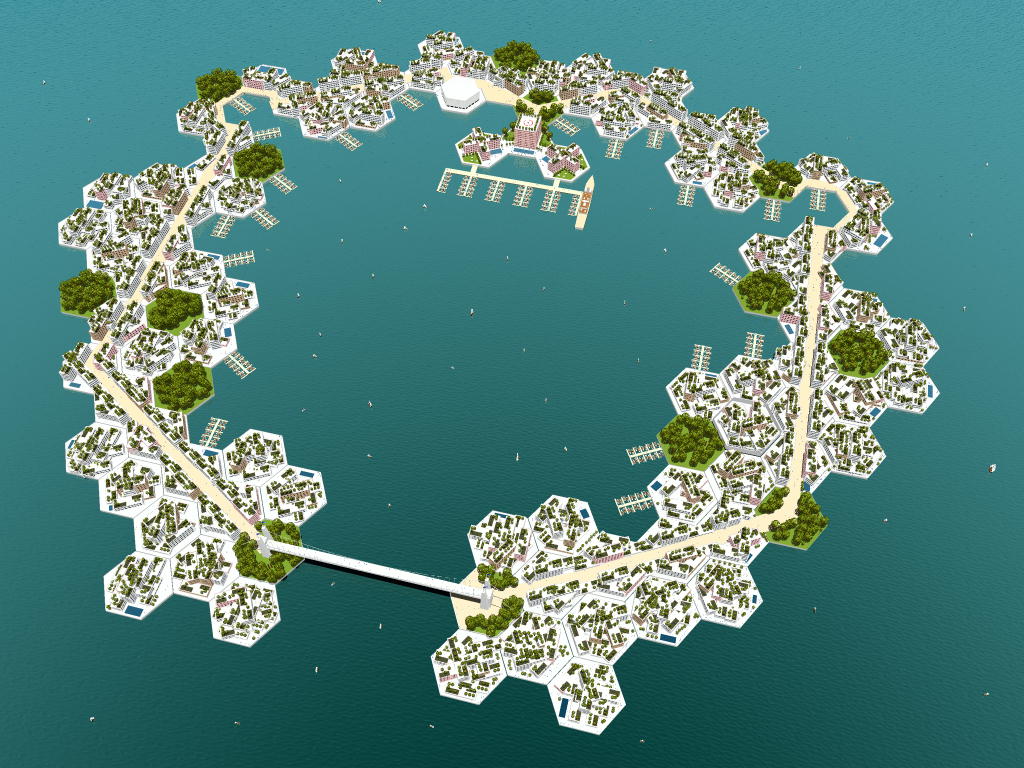
{ Week 9 } Model Ideas


Exploring!!!

{ Week 9 } Other Forms


This is the montenegro apartments by BIG. Makes me think about the possibilities of organic curves.

{ Week 9 } Steps Ideas

Did some modelling. Still Thinking about form.


Thinking about how to step the "paddies" and the relationship it has with the accommodation spaces underneath.

{ Week 9 } Arrangements


Stepped Rice Paddy Form Presents opportunities of light.


Then thought about vertical planting as well.


I want spaces to work hard. Plants will need light but so will people. Accommodation will sit directly under food production spaces so that people can still have light and sir. The window will hence also open out onto the planting and have "ocean" views.


Walking areas and Semi-Private Spaces can extend beyond the food production area to create healthy vibrant spaces for people to walk, talk, relax, eat, read, work, etc.

{ Week 9 } Initial Form


Section


Alternative Form and Idea

I imagined that the structure would look like a leaf or something close to a ship for mobility but I noticed Chau is doing something similar. I am considering changing the shape of the shell. I think it will be nice if all three of us showed very different designs. So back to the drawing board. Should be ok.

{ Week 8 } Cont. Opposite Thoughts


Sinking Ship!
What if I sink the gardens into the boat. What opportunities would present itself? How about the idea of capturing wind energy and collecting water that exists in the air already? Will see.

{ Week 8 } Initial Thoughts

In section. Folding Shell.

Form
Should be aerodynamic for movement

Wind Advantage
Form should catch the wind to convert into electricity for: lighting, communications, etc.

Rising Heat
Can be captured for electricity


Form
Core as a community space. Edges as personal spaces.


Alternative Arrangements
Creating sun opportunities. Lowers energy cost. Not sure if the air to spaces ratio is good enough?


Open End
How about creating a closer relationship between the community space to the water, situating it between the water and the land. Like a beach???? There are notions about how we would normally plan a city.

{ Week 8 } Rice Intensification and Process


Australia boasts the most efficient rice production system in the world. We create the highest yields of medium grain rice, using least amount of water (50% less). I did get this information from Sunrice though.

Another efficient rice method is SRI - system of rice intensification. Currently, we are teaching women and men in developing countries to use this method to increase yields. It is a dry method as opposed to the wet one.

http://www.oxfam.org.au/explore/health/food-and-nutrition/the-rice-revolution

{ Week 8 } Ship Form

Source: Rice Field in Ha Giang, http://www.vnphotoguide.com/alpha/index.php?page_file=gallery&sub_page_file=enlarger&image_id=161

I will base the form of my mobile architecture on rice fields!

{ Week 8 } Aquaponics Ratios

Pilot Commercial Aquaponics at Challenger Institute of Technology (Fremantle, WA)

Say a 5000L tank will require:
- a vortex filter system
- 1000L sump tank with submersible pump
- 16 x 6m NFT channel

Shade cloth for:
- wind
- frost
- birds

Fish Ratio
- 350 Rainbow Trout
- 35kg per cubic metre

Hallam's Aquaponics

This system uses 1 Fish : 10L water : 10 L Food  (As long as fish are growing at different rates).
So 100 Fish: 1000L of water : 1000L of food can be produced.

In another video showing a commercial crop, 1000 Lettuce can be harvested every week with 4000 Lettuce growing. To achieve this rotation, it takes 2hrs a day to harvest but I couldn't find out how many people this required.

Other Systems
I also found another ratio: 1 Million Pounds of Food, 3 acres, 10000 Fish, 500 compost

{ Week 8 } Main Components

http://aquaponicssystemplans.com/wp-content/uploads/2011/07/Commercial-Aquaponics.jpg
  • Fish tank
  • Grow beds
  • Water pump
  • Aeration pump
  • Biofiltration
  • Mechanical Filtration
  • Plumbing for irrigation and drainage
  • For media based systems, medium is needed.
  • Fish and plants (seeds)
  • Water
http://www.aquaponics.com.au

{ Week 8 } How Plants Receive Nutrients from Fish


My dad started a small patch of tomatoes a couple of years back using a similar technique to the video. Very primitive but similar ideas of using the tank of fish at the bottom as opposed to NFT which uses a nutrient film flowing into channels. Wish I had looked more closely at what he was doing at the time...

Information below by Dr Wilson Lennard, Phd Applied Biology, Australia, studies aquaponics
http://www.ecofilms.com.au/2011/01/08/dr-wilson-lennard-on-commercial-aquaponics/


Natural Provider of Nutrients
Phosphorous, Nitrogen and Micro-minerals are provided by the fish waste as opposed to using Seasol or other fertiliser.

Additions
This system has iron deficiencies so you need to add this especially in the first year.
Calcium hydroxide and Potassium carbonate is also added. This also balances pH.
Sodium bicarbonate is a cheap option but sodium is not good for the system.

{ Week 8 } Hydro/Aqua-ponics Research


Benefits of hydroponics.

  • No soil is needed
  • The water stays in the system and can be reused - thus, lower water costs
  • It is possible to control the nutrition levels in their entirety - thus, lower nutrition costs
  • No nutrition pollution is released into the environment because of the controlled system
  • Stable and high yields
  • Pests and diseases are easier to get rid of than in soil because of the container's mobility
Benefits of Aquaponics
  • Yields 25-75% Faster

{ Week 8 } Circle of life

Mimic natures cycles.

Produce an ecosystem?

For example, produce seaweed for consumption and use as fish food to harvest fish. Fish waste can be reused for seaweed production.

But what about plankton and other things you can't get? Maybe it should be open for any fish to come along

This is hard. Time to look at food production soon

{ Week 8 } Ship Basics

SHIPWEIGHT 9 with crack !!!

When designing and building a vessel, weight and center of gravity are key parameters for successful performance. Speed, strength, deadweight, stability and seakeeping are all parameters crucially dependent on the weight and center of gravity. To ensure and maintain these parameters a reliable estimation of weight and center of gravity followed by an organized tracking and monitoring activity is essential.

{ Week 7 } Experiential Thoughts


Gehry, Art Gallery of Ontario
http://wvs.topleftpixel.com/photos/2008/11/AGO_opening_ship-ribs_tall_02.jpg

{ Week 7 } Inspiring Ship Engineering: Catamarans

Benefits of a double hull
Faster than monohulls as there is less drag in the water.
Resists overturning better

Cons
Slower to turn than monohulls due to drag
Can capsize


http://www.superyachttimes.com/articles/Image/Companies/Sabdes/2009-01-50m-Cat/Sabdes-Cat-50-big.jpg


This is a high speed military catamaran.
http://www.ratedorhated.com/ratings/huge_catamaran_b.jpg


http://www.liveyachting.com/wp-content/uploads/2009/06/60m-motor-catamaran.jpg

Basic Catamaran


Hyodroairy or Pontoon Type

SWATH Type

{ Week 7 } Artistic Inspiration


Tim Hawkinson, Mobius Ship, 2006, wood, plastic, Plexiglas, rope, staples, string, twist ties, glue
http://cdnimg.visualizeus.com/thumbs/bf/96/sculpture,art,architecture,creativity-bf96b23d7bf5d9670d9d7a8b5586a242_h.jpg


Daniel Widrig
http://cdnimg.visualizeus.com/thumbs/8e/0e/architecture,art,daniel,widrig,design,digital,digital,design-8e0eecdb4248b7eb329bf8aacbb827a7_h.jpg


Daniel Widrig
http://cdnimg.visualizeus.com/thumbs/5c/f6/architecture,art,daniel,widrig,design,digital,design,digital,fabrication-5cf6f90925f403c462d9b3dc4d1cc75c_h.jpg

{ Week 6 } Presentation


PANEL 1
Took forever to understand what panel one should be about. Did so many iterations! We ended up taking four issues parliament is concerned about and highlighted the key problems that needed to be addressed. We wanted to deal with:
1. Increasing Natural Disasters
2. New Resilient Infrastructure
3. Food Supply
4. Food Waste

We used before and after pictures to show problem and goals. We worked really hard at drawing these up and Chau even bought a toy train so we could take a photo showing how we can use mobile structures to bring food to people.


PANEL 2
Visually illustrates how the mobile structure fits into existing aid response infrastructure and how it it functions and reacts on a big global scale to a more local scale.


PANEL 3
Shows services we will provide and also talks about identity and presence.

{ Week 6 } Presence


We are playing around with ideas about creating an identity that would be recognisable as being Australia’s Capital and Parliament. This is especially important because we are not physically located in Australia’s capital city. I think this can really open up opportunities about direct, abstract and poetic conveyances of what makes Canberra a capital and what makes us Australian. There is a lovely relationship between the mobile structure’s activity of giving and providing and Australia’s values about camaraderie and generosity.

1. Light. Form.
Presence and Identity should begin with the structure being seen in the distance. Ideas include it being seen as a beacon of hope. This can perhaps be conveyed poetically using light. Perhaps it can be recognisable using form.

2. Planning and Function
Floor plans and functions can relate to Parliament’s spirit of working together to achieve goals of equity, justice and Australian pride. Ideas of mateship can shine through by designing the ship to function together well and efficiently. Perhaps this parliament relationship can be a bit more literal, taking inspiration from the curved forms of parliament house to form the basic floor plans of the mobile structure.


{ Week 5 } Group Meeting

Agenda
Finish draft board 1, 2 for tomorrows tutorial


Topics: Mobile [ Summary ]


. Natural Disasters
- Mitigation of Natural Disasters
- Prevention - Structural - People
- Protection - Infrastructure
- Recovery - Immediate - Health - Rebuilding Infrastructure
- Long Term - Health - Rebuilding Community
- Rebuilding Livelihood


. Transport - Congestion - Environmental Impact - Health
- Carbon Emission
- Underground Transport [ Solution ]
- Communication - More Efficient Use of Roads
- More Roads - Less Green Space

. Environment - Carbon Tax
- Overconsumption - Waste - Carbon Emission - Climate Change
- Actions - Natural Disasters
- Economy Downfall - Health

. Food
- Waste - Landfill - Carbon Emission
- Production Waste - Transport - Oil
- Carbon Emission
- Congestion
- Distribution
- Accessible
- Primary Suppliers - Secondary Middle Man [Distributer] - Consumption
- Transport


. Communication
- Meeting in Person - Inefficient use of Resources [Debate, Campaigning]
- Politician Communication
- Public - Movable Pavilion
- Each Other
- Other Countries
. Economy - Alternative Self Sufficient Markets


Today we discussed what exactly will be in our boards.
We went through our notebooks and blogs to simplify our thoughts, trying to summarise our thoughts from the last 5 weeks.

{ Week 5 } Chance to Grow?

What are the system’s possibilities for growth?

Can there be many smaller mobile structures that can function independently but can come together for coordinating larger operations?

Can the mobile structures continue to grow as changes and new needs must be met?

Perhaps producing fruit, vegetables and wheat/rice, etc is not enough. Maybe there is a possibility for extending this food network into the water ie. Fishing catchments. Pretty convenient since we are in the water anyway.


http://forums.civfanatics.com/showthread.php?t=382212

This is from a game website. It makes me think about possibilities about having several mobile parts that could possibly come together to perform complex functions but can still function independently. Possibly this could also talk about creating communities and ideas about flexibility to cater for different aid responses based on assessing the needs of the people.


{ Week 5 } What to do with the food containers afterwards?


If we were to distribute food using shipment containers, we wonder if it is important to collect the containers afterwards for reuse or if there is a better way to recycle them for better use on land.

At first, we came up with using the containers for future housing because it would be cheap and would provide an added bonus in providing care for people.

Another option would be to alter the containers so that they can be quickly converted to become functional spaces for volunteers and officials to use for food storage, food distribution, meal preparation to feed the masses and accommodation, etc. Perhaps some can remain mobile to provide food to people who cannot reach refugee camps, etc.

{ Week 5 } What would the food be contained in?

Would it be harvested and shipped? Or would it be shipped in the container it grew in to continue production on land?

The first option may produce less waste and is simpler. It might just be plastic wrapped?

The second option would be more complex. Transporting soil is very heavy and what would we do with the containers afterwards?

{ Week 5 } What happens upon arrival? How is food unloaded?


I think because this mobile structure will be so big, we must think about access. Will it be able to fit under bridges or go into narrow ports? What about turning circles? Countries in poverty or disasters may not have the infrastructure to be able to bring in the mobile structure for anchoring.


As well as this, we must consider safety when entering countries in conflict. Our solution is to make it possible to anchor offshore and carry the food in using a smaller boat.

{ Week 5 } Food Ports


Thinking about possible ideas for reducing food milage and making our mobile structure work better with the food aid systems. One option we looked at was to transform parts of Australia’s major seaports into farms as well. We might be biting off more than we can chew though and this would require massive amounts of research.

QUESTION
What sort of changes would we see in the community and its urban character? How would this affect the fishing industry? What would this do for roads and access?

{ Week 5 } How it can fit with existing aid responses?


One important factor of the mobile structure was to understand how it would work with existing aid responses. After researching current aid systems and having lengthy talks with the group, we decided that parliament can help by providing a response that sits between a plane response and a ship response.

{ Week 5 } Mobile Structure Routes


{ Week 5 } Current Aid Responses and Strategies

WFP Drops Food over Sudan


AIRDROP
Airdrop is expensive and dangerous but is done when other means of transport is not possible ie. When roads are blocked or washed out. It takes three days to secure a drop, contact local officials and warn locals to stay clear of the area.
Food can weigh 120pounds so it triple wrapped in plastic to survive a 1,600 foot drop.

ONCE ON GROUND
Food is then hauled onto trucks by local villagers and driven to a nearby warehouse to be distributed by different organisations ie. WFP, CARE, Catholic Charities, etc.
Distribution of food is organised to avoid chaos. People present registration cards which contain family details such as ages and number of children to receive food.

SHIP FREIGHT
Ships currently travel from their point of origin to major ports.
Food is then loaded onto trucks, trains, helicopters and planes. Sometimes, camel, elephants, donkeys, yaks and other alternative modes of transport are used because of factors such as availability or terrain difficulties. Land mines and rebel forces are also an issue.

OTHER FORMS OF CONTRIBUTION
Contribution comes in three forms: cash, food and services.
Food is bought from places close by to reduce wasting time and transport costs.

DELIVERING MEALS
Food sent must be transportable and won’t spoil. It is likely that they won’t be able to cook their meals. This costs 30 cents a meal.
People are given basics: cereal, beans, peas, vegetable oil, salt, sugar, wheat, maize or soy flour.

People’s needs are firstly assessed and diet is considered. Rice is often sent to Asian countries. Millet, a common African grain, is sent to African countries.
It’s about keeping people alive, being culturally appropriate and assessing needs.

REBUILDING LIVES
Putting communities back together takes time, work and more nutritious food.
A critical component is its school feeding programs. Children come to school and receive free meals.
Food for work programs help rebuild bridges, dams and wells.

Health programs are implemented and proper nutrition is provided to care for pregnant mothers and ensure babies are born healthy.
“Food is a fundamental building block for healthy societies. The answer for curing hunger long-term is to invest in these programs.” (WFP Officer, Maggie Carrington)


http://www.wiziq.com/tutorial/53758-Food-Force-2

{ Week 4 } Issues with Food Aid

Distance and Time

Short Term Response

Waste


http://www.un.org/ecosocdev/geninfo/afrec/vol19no4/194relief.html

{ Week 4 } Group Meeting


We initially thought we had to add all four strategies into the first panel...

{ Week 4 } Architectural Types and Purposes

Services that it can possibly include are:

Closed loop system in producing food:
1. Production of food
2. Distribution of food
3. Waste is composted
4. Compost is collected
5. Compost is used to produce more food

{ Week 3 } Infrastructure and Presence

FOOD FARMING
Use existing train infrastructure.

Using train networks aims to reduce food milage, increase food waste re-use, reduce fertiliser and pesticide use and activate a low energy food industry. Parliament agents can travel to monitor and respond to changing food needs and availability.

By incorporating a food production system into existing train networks, it is also possible for people to trade directly during transport by travelling to different carriages. Doing your shopping on the train-ride home would mean there is a dual purpose in travelling, public transport becomes more appealing, less time is spent travelling to the shops, reduce traffic congestion and travelling becomes meaningful.

1. Build Food Production Bases (Urban Farming/Greenhouse) at strategic points around train lines. This brings rural farming and urban living closer together.
2. Produce is then collected by trains to continue growing on specifically designed carriages. 3. The produce is either then open for trading on the train like a moving market so that produce is always fresh or distributed to markets and shops.
4. Food waste can also be collected from restaurants/homes/universities to be composted at food bases and then reused in the production of food.


FOOD AID
Use existing sea ports.

In 50 years time, population growth, climate change, natural disasters and farming pressures will impact on food supply. An independent, dependable source of food may be required. Neighbouring countries may need Australia's aid in supplying food and responding to natural and human disasters.

{ Week 3 } Architectural Stories

HUMANITARIAN AID
Produce food for times of need: Natural disasters, humanitarian aid overseas.

Ideas include:
1. Gathering food donations: canned food, seeds, plants
2. Provide manpower: to go to places in need of services like making fishing boats, distributing bags of rice, canned food possibly
3. Perhaps create a system for sustainable food production. I'm currently imagining a greenhouse on water as a specific solution/strategy.
1. Gathering food waste for composting system
2. Have a water irrigation system setup if in the water by providing filtration system.
3. Solar powered
4. Produce seedlings to distribute to places in need of help. A case of teaching someone to fish to live as opposed to giving fish.
5. Produce food itself for immediate food distribution

Questions
1. Does this system extend to providing emergency shelters and doctors?
2. What about safety and security? Imagine pirates or military attacks.
3. Think about establishing bases or "ports" for permanent points of access(distribution).
4. Think about how a "virtual" system can assist in communication and provide information to the public about location and activities.

{ Week 2 } Exploring Agents


Creating Positive Action on Issues such as:

1. Alternate Energy.
Solar, Wind, Biomass, etc.
a. How can we combine such technologies so that a city can be self-sustained?
b. How would it be distributed?
c. Would this change the face of cities?

2. Increasing Natural Disasters. Scenarios include:
Flood (Brisbane). Bush Fire (Black Saturday). Cyclone (Darwin). Tsunami (Japan). Earthquake (New Zealand).

How do we protect ourselves (prevention)?
Flexible buildings. Moving buildings. Communication.

What do we need in an event of emergency?
Distributing/Deploying shelter, food, health, water, warmth. Manpower required. Can we do it using machines more for efficiency? How important is the presence of Parliament in these situations?

What about aftermath?
Clean up. What can we recover? How do we go about fixing up buildings and roads? How do we help those who can't help themselves? What services do we need to get started ie. making boats to re-activate fishing communities, providing rice seeds for livlihood.

What about protecting culture and history - art, textiles, hunting craft, lifestyle.

3. Expanding Natural Habitats.
As opposed to increasing urbanisation. How to re-introduce natural habitats as a layer in urban centres. Strategically placing such green initiatives according to function ie. Recreation like parks. Shading for walkways. On roofs for food production or water filtration or relaxation. On walls for food production and insulation. In offices to cleanse the air and create health benefits.

4. Food Supply.
How can food supplies be produced in a distributed fashion in urban areas to alleviate the need for travelling and hence carbon pollution and using oil resources?

Although food waste is biodegradable, it produces methane in landfill and the food we don't eat also means that energy was also wasted in producing the food and transporting it. Is there a way to reduce this waste by changing people's perception of food waste? What about changing people's behaviour about consuming food and storing it in the fridge? How can we recycle this waste by giving wasted food a second life? For example, can we create a system to compost and collect this compost for the reuse in producing food? Where can we collect this waste? Dwellings. Multi-dwellings. Restaurants and cafes. Office. Schools and Universities. Food courts.

5. Poverty.
Networking. Community Help. Global Help.

6. Health.
Reaching those in need. Humanitarian Aid.

7. Mental Health. Education.
Reaching poor countries.

8. The Elderly.
Making life easier, convenient, safe. Getting milk shouldn't be a difficult task.

9. Water Supply.
Clean and continuous water supply to all. Wasting water. Providing clean water to the needy.

10. Waste

11. Globalisation and Free Trade.
Create Alternative Self-Sustaining Markets. Encourage local produce and trade.

12. Rich and Poor

13. Population Growth and Transport Congestion

14. Regional Farming

15. Carbon Tax

{ Week 2 } Flexibility


The beauty of chance and human imput.

A building should still be useable over time. Functions may change. Parts may be added or changed.

1. Moving Parts (Pivot, Sliding, Folding)
How often will these parts realistically move? Consider size, weight, difficulty of operation, mechanisms to operate, frequency of use, purpose of movement.

2. Grow (Additions over time, Hidden, Dissassemble-able?)
How flexible is an addition? How much effort and time is required for such growth? How much would it cost financially, environmentally, public confinece?

When is growth efficient and when is it not worth the cost?

3. Multi-use
How can spaces be used to their maximum potential? Is it managed by time? Is the space designed for different users and functions?

4. Customisation
User customisation. Cheap and makes spaces usable by personalisation. Paint. Furniture. Small changes such as adding dados and level changes.

5. Renovation
Keeps the building fresh.


QUESTIONS
1. What spaces are necessary? Is it necessary to have two chambers in parliament, for example? Can the space be flexible enough so that we only need one chamber.
2. How resilient is the structure/agent? How well does it adapt to changes (human, climate, economy)?
3. Who decides on what happens in a space? How can it be constantly activated to maintain vitality? What groups of people would it cater for?

{ Week 2 } Mobile


What can move?
1. Transport people
2. Transport goods and services
(food, water, tools, livestock, markets, doctors)
3. Connect people
(Increase communication, maintain relationships)

What are important factors of mobility?
1. What are the arrival points? (Do they lead somewhere? Deadend?)
2. Where do they bypass? (Does this disadvantage these areas?)
3. Where do we need to include new points of mobility?
4. Why? Does it provide more access? efficiency?
5. What are the specific requirements for certain peoples to move? For example, requirements for the elderly (access and help getting out of seats), babies (safety, noise, pram space), children (different proportions, sense of time and hence boredom), Cyclists (room for them?), Shoppers (Room to store bought items)?

What sort of mobility is there? Keep in mind time and speed. What are we traversing and how difficult it is. What are its risks?
1. airborne
2. seaborne
3. land - walking, cycling, motoring, train?

Is this transport for one person, a few people or 100s or 1000s of people? Is it transporting commodity?

How far are we travelling?
1. Within a city
2. Between cities
3. Between countries

What happens while we are mobile?
1. How can we make the journey more interesting/meaningful? (Disseminate information? News. Events. Entertainment for children)
2. What if it is about the journey and not the destination? (Having a meal, being there for MP announcements, making something to contribute at arrival points)
3. How can we keep in contact with outside places/events while we are on the move?
4. Can we contribute to places and events while we are on the move? (Perhaps we can distribute commodities or services as we move along)
5. Are these contributions permanent or temporary?
6. Can we promote positive changes to where we have been?
7. How about if mobility meant the sum of all parts? Small parts moving to achieve something big and desirable in the end? What if things can only happen when all parts are there?
8. Perhaps our mobility are a part of a system involving the gathering of "waste" to give a second life as a "nutrient" for another place?
9. Is mobility about being able to do something while on the move or is it about being able to get around to assemble and dissassemble the agent?

Is the mobility based on node to node? Is it intact the whole time to be able to use as we move or is it to be assembled and disassembled between points?

{ Week 2 } Virtual


Types of Virtual
1. Internet
2. Hologram
3. Digital Devices ie. Phone, iPad
4. Simulations
5. Games
6. GPS

What can it assist/improve in our lives?
1. Real time communication
2. Record and distribute information/events quickly
3. Inform/Change public opinion on a large scale
4. We can experience things that couldn't be possible everyday (Imaginative spaces, simulations like flyng planes)
5. Another learning style (simulations)
6. Better access to information and opinions
7. Better visualisation of information and imagination

QUESTIONS
1. Who has access to it?
2. Who controls/regulates it?
3. How does a virtual component impact on everyday living?
4. Does it reduce face to face contact?
5. Does it change the way we relate to each other?
6. How does it impact on the environment?
7. Would it reduce congestion?
8. How would it facilitate change?

{ Week 2 } Distributed


Types of Distribution
1. Sprawled
2. Random
3. Adapting and Natural
4. Opportunistic
5. Organised and Controlled
6. Temporary or Permanent?

How do distributed spaces work together?
1. Does each part all have the same function with a main HQ?
2. Does it distribute itself as required and come back together? So a temporary distribution? Or is it a permanent distrbution?
3. Or does each part have a different function that service eachother?
If each part does have a different function, how do they work together to achieve goals? Does it require mobility; transporting things to each other? Or does it distribute information to each other virtually?

How would the distribution be decided? How is it monitored?
1. Is it limited by geography/city elements?
2. Who decides where it is to be distributed?

What impact would it have on its surrounding environment? How would the city change? Would people's behaviour change because of this distribution? For example would it change traffic conditions and the way people would travel?

How would the distribution improve:
1. accessibility
2. traffic
3. carbon emmissions
4. reduce resource consumption
5. public perceptions about climate